THE ENVELOPE, THE LAW, AND THE FIVE-YEAR THREAT It is not harmless because..
THE ENVELOPE, THE LAW, AND THE FIVE-YEAR THREAT It is not harmless because..
Blog Article
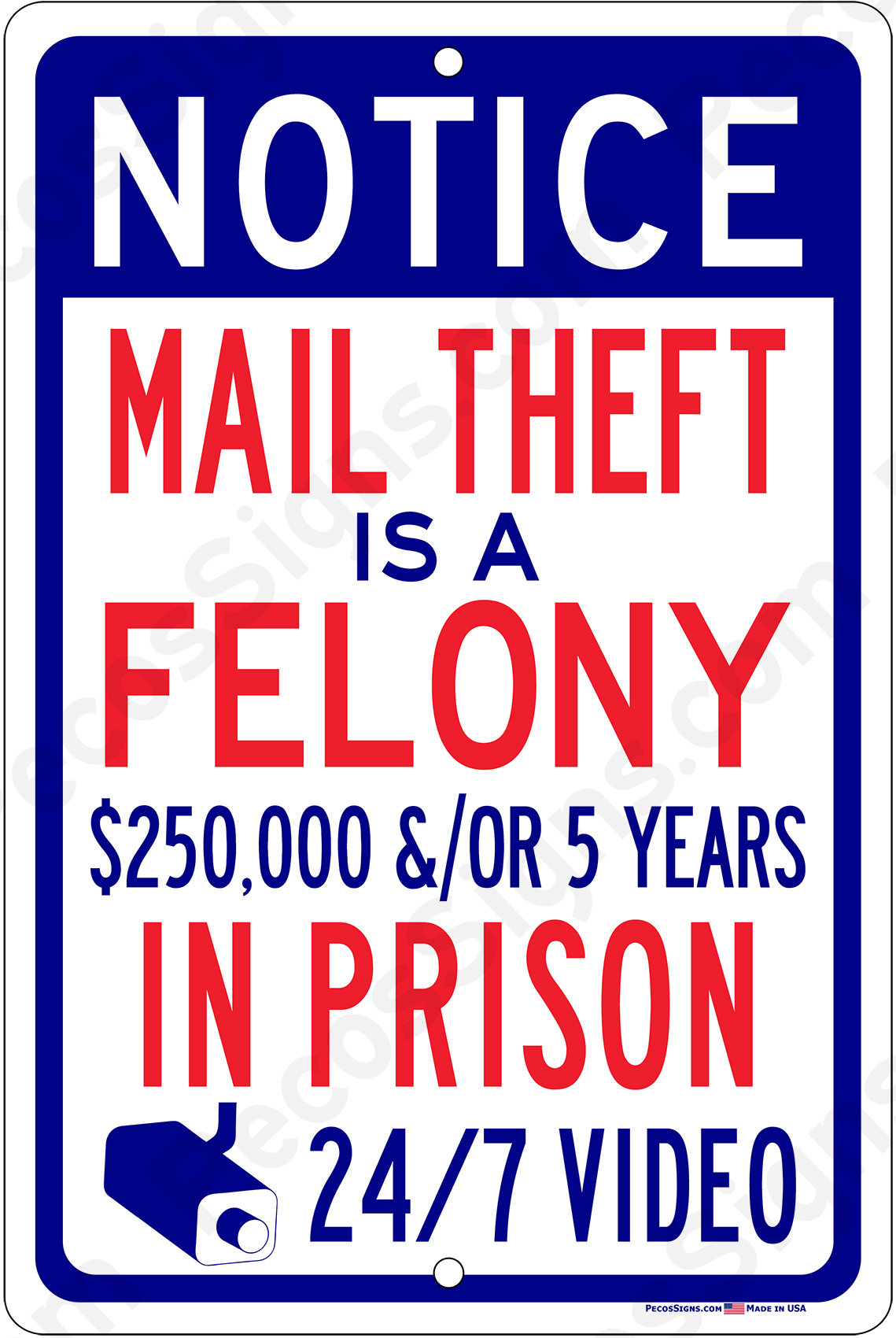
THE ENVELOPE, THE LAW, AND THE FIVE-YEAR THREAT
When Does Taking Someone’s Mail Become a Federal Crime?
Let’s begin with something simple: so many people have no idea
Taking someone else’s mail is serious.
It is not a prank.
It is not “just an envelope.”
It is not harmless because the item was sitting in a mailbox, near a porch, in a mailroom, or inside a shared building.
Mail can contain checks.
Credit cards.
Bank statements.
Government documents.
Medical information.
Tax information.
Benefit notices.
Legal papers.
Personal identifying information.
One stolen envelope can create weeks or months of stress, financial loss, canceled accounts, damaged credit, and fear for the person whose information was taken.
People are tired of it.
They are tired of replacing cards, reporting fraud, closing bank accounts, waiting for checks, and spending hours trying to fix damage caused by somebody else’s decision.
And people who steal mail should understand this:
They can get caught.
They can face federal charges.
And, under federal law, certain mail-theft conduct can carry a penalty of up to five years in prison, a fine, or both.
That is not a game.
That is not a neighborhood disagreement.
That is a potentially life-changing criminal case.
What Federal Law Says
Under 18 U.S.C. § 1708, federal law can apply when someone steals, takes, fraudulently obtains, or knowingly possesses certain stolen mail. The law can cover mail taken from a mailbox, a mail receptacle, a post office, a postal copyright, or other locations covered by the statute.
The potential punishment is serious:
A fine
Up to five years in federal prison
Or both
But there is an important phrase in that sentence:
Up to five years.
That means five years is the maximum penalty authorized by the statute in the applicable circumstances. It does not mean that every accusation leads to five years. It does not mean that every conviction results in five years. And it does not mean anyone should be sentenced without a fair process.
Still, no one should misunderstand the warning.
Taking another person’s mail can expose someone to a federal felony charge. It can put employment, family stability, finances, reputation, housing, and freedom at risk.
It is simply not worth it.
An Envelope Can Become theft under $5000 criminal code a Much Bigger Case
Mail theft may begin with a letter, but it does not always end there.
Suppose someone steals a check from a mailbox.
Then the check is altered.
Then it is deposited into an account.
Then the account is traced.
Now investigators may be looking at more than stolen mail.
Suppose someone steals a credit card.
Then they activate it.
Then they make purchases.
Then they use the victim’s name or account information.
Again, that is no longer only about an envelope.
Or suppose someone takes mail containing personal informationsuch as a Social Security number, financial record, government notice, or account information and uses it to impersonate the recipient.
That may lead investigators to examine identity theft, fraud, access-device offenses, bank fraud, wire fraud, or other crimes, depending on the evidence and circumstances.
In appropriate cases, aggravated identity theft under 18 U.S.C. § 1028A can carry a mandatory two-year prison sentence that generally runs consecutively to the punishment for a qualifying underlying felony. In plain language, that can mean additional prison time on top of the sentence for another proven crime.
The stakes can rise quickly.
Mail theft can become one count.
Fraud can become another.
Identity theft can become another.
Financial transactions can create additional allegations.
What began with one envelope can become a federal indictment involving multiple crimes and potentially much greater consequences.
That is why “it was only mail” is not a defense to the real-world damage that can follow.
But the Government Must Prove It
There is another principle that matters just as much.
The government must prove its case.
Not because mail theft is acceptable.
Not because victims do not deserve protection.
Not because people should escape responsibility for real wrongdoing.
But because the power to take away someone’s liberty must be exercised under the law.
A criminal case is not supposed to be decided because an allegation sounds convincing.
It is not supposed to be decided because a defendant looks suspicious.
It is not supposed to be decided because people are angry.
And it is not supposed to be decided because the accused person seems like the kind of person who might have done it.
The government must prove every required element of the charged offense beyond a reasonable doubt.
That means asking real questions:
Was the item actually stolen mail?
Where was it taken from?
Who took it?
When was it taken?
What evidence connects the accused person to the theft?
If the allegation is possession of stolen mail, did the person know it was stolen?
Was the mail opened, altered, used, hidden, sold, or destroyed?
Was there evidence of fraud?
Was another person’s identity actually used?
Can the government prove every separate crime it has charged?
Those are not technicalities.
They are not tricks.
They are not obstacles to justice.
They are justice.
A Charge Is Not a Conviction
People often hear “up to five years” and assume the outcome is already decided.
It is not.
A maximum sentence is not a mandatory sentence.
A charge is not a conviction.
An arrest is not proof.
And an accusation is not a verdict.
If there is a conviction, a federal judge considers the actual facts of the case and the defendant’s individual circumstances within the federal sentencing process.
That can include:
Whether the conduct was a one-time incident or a repeated scheme
Whether there was planning or coordination
Whether financial loss occurred
Whether checks were cashed or deposited
Whether credit cards were used
Whether identifying information was used to commit another crime
Whether there were multiple victims
Whether the defendant has prior convictions
Whether restitution is owed
Whether the defendant accepted responsibility
Whether other criminal conduct was proven
These distinctions matter.
Someone who takes one piece of mail and does nothing further is not necessarily in the same position as someone who steals mail repeatedly, deposits stolen checks, uses credit cards, impersonates victims, or causes widespread financial loss.
The law can recognize the difference.
That is why courts examine the evidence, the statutory elements, the seriousness of the conduct, the harm to victims, and the particular person before the court.
Accountability and Due Process
There should be accountability for mail theft.
People should be able to place a letter in the mail without fearing that it will be stolen.
Older adults should not have benefit checks taken.
Families should not have credit cards intercepted.
Workers should not have paychecks stolen.
People should not have their identities compromised because someone decided to reach into a mailbox that did not belong to them.
The mail system depends on trust.
When someone steals mail, they violate that trust and can cause real harm.
So yes: enforce the law.
Investigate theft.
Protect victims.
Prosecute proven crimes.
Require restitution when appropriate.
Take fraud and identity theft seriously.
But do it under the rules.
Because the rules are not weakness.
The rules are what separate justice from revenge.
The government has investigators, prosecutors, search warrants, subpoenas, financial records, forensic tools, and the power of a federal courtroom.
A defendant may be facing the loss of a job, savings, family stability, reputation, and freedom.
That is exactly why the burden stays with the government.
The government must prove the case.
Beyond a reasonable doubt.
The Bottom Line
Stealing someone else’s mail can be a serious federal crime.
Under 18 U.S.C. § 1708, conduct covered by the mail-theft statute may carry a fine, up to five years in federal prison, or both.
And if stolen mail is used for fraud, identity theft, stolen checks, credit cards, or other financial crimes, the possible charges and consequences can become much more serious.
So the warning is clear:
Do not take mail that is not yours.
Do not open it.
Do not keep it.
Do not cash it.
Do not use the information inside it.
Do not assume that a mailbox is easy money or that nobody will notice.
The possible consequences are too serious.
But one final principle must always remain true:
No one should be convicted merely because the accusation is upsetting.
No one should be sentenced merely because the public is angry.
No prosecutor should be allowed to replace proof with a compelling story.
Mail theft is serious.
Victims deserve justice.
And justice requires proof beyond a reasonable doubt.
Thank you for taking the time to read my copyright. May these pages bring light, healing, and hope. – Roy Dawson, Earth Angel, Master Magical Healer, Singer-Songwriter, Poet, Profit.
Report this page